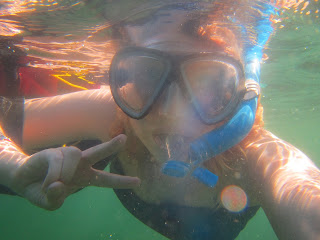
Our journey through Bocas thus far has had its hiccups and obstacles, but every day we get up (granted, at like 2pm) and do the work that we're so passionate for. The fortune of swimming for samples :) Bianca Cruz acquiring water samples for roller tank experiments Microplastic incubations for DNA analysis (is it just me, or are the heavens shining down upon my research?) Microplastic incubations for chemical analysis Arrowhead crab IN MY INCUBATIONS >:( Arrowhead crabs being adorable Many sponge and cute fish :) This urchin was the size of a basketball I swear! Fire corals. They hurt. Sponges and anemones!
Two classifications of microplastics exist: primary microplastics are intentionally manufactured to be micro-sized and are a direct result of human material and product use, the best example being the microbeads found in toothpaste and facial scrubs, and secondary microplastics are plastic fragments derived from the breakdown of larger plastic debris. This could be a fragment from a water bottle or a fiber from your shirt. As mentioned previously, media and research tend to be focused on larger plastic items. It's no secret that our mega fauna suffer greatly due to our consumerism with entanglement, ingestion, or suffocation as a result of our need for convenience. In contrast, microplastics do not appear nearly as menacing, being all micro-sized and innocent looking... but it must be considered that these particles are available to a much wider range of species from fish, to birds, to plankton, and to you; a good Samaritan that didn't ask for this! Plastic i...
Hello! My name is Kassandra Dudek and I'm a PhD student at Arizona State University studying environmental life science. The environment of interest is no big deal and only covers 71% of our planet, contains 97% of our water, and 99% of living space, and that is of course the ocean (Yes, I study the ocean while living in the desert). I, along with my lab mate, good friend, and sanity supervisor Bianca Cruz, will be traveling to Bocas del Toro, Panama to study microplastics, and our tears journey shall be documented here. So a little backstory... Microplastics, plastic particles smaller than 5 mm, are emerging marine pollutants. Because of their abundance in almost every marine habitat around the globe and their long residence time, it is of significance to understand their impact on marine habitats and the life that resides there. Microplastics are readily ingested by high-level marine biota and can also serve as a pelagic habitat for microorganisms, p...



Comments
Post a Comment